
Blue-Green Algae in Garden Ponds

Introduction
Blue-green algae in garden ponds are not actually algae at all. They are cyanobacteria, a group of bacteria that can rapidly form blooms in nutrient-rich water.
These blooms often appear as thick green scums, floating mats, or paint-like streaks across the pond surface. In some cases they produce toxins that can harm fish, pets, wildlife, and even people.
Understanding why blue-green algae appear in ponds is the first step toward preventing and controlling these blooms.
How to Identify Blue-Green Algae in Garden Ponds
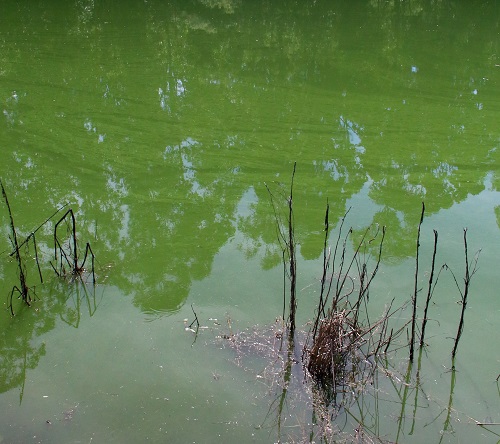
Blue-green algae blooms can appear suddenly and often look different from normal green algae. Pond owners often notice unusual colours, surface scums, or cloudy water.
Common signs of blue-green algae include:
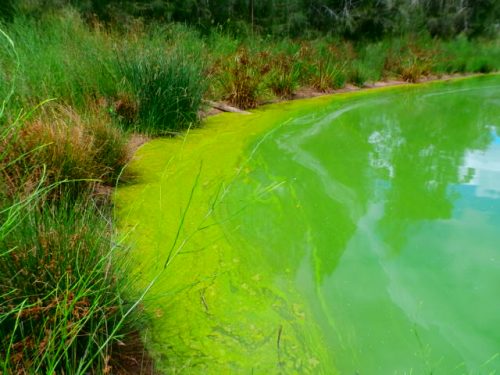
• Green or blue-green paint-like scum on the water surface
• Floating mats or streaks that collect along pond edges
• Water that looks milky green or cloudy
• Slimy coatings on rocks or pond margins
• A musty or earthy smell
Unlike harmless filamentous algae, cyanobacteria blooms often form thin surface films that can be pushed across the pond by wind.
If your pond suddenly develops these symptoms, it may indicate a cyanobacteria bloom.
What Is Blue-Green Algae?
They thrive in warm water with excess levels of nitrogen and phosphorus.
Unlike beneficial algae that support aquatic food webs, cyanobacteria often dominate when pond ecosystems become imbalanced.
They can appear as:
• green or blue-green surface scums
• floating mats or streaks
• thick cloudy green water
• slimy coatings on rocks or pond edges
Some species also produce unpleasant earthy or musty smells.
Why Blue-Green Algae Appear in Garden Ponds
Blue-green algae blooms usually occur when nutrients accumulate faster than the pond ecosystem can process them.
Common causes include:
Excess Nutrients
Fertiliser runoff, fish waste, decaying leaves, and organic debris introduce nitrogen and phosphorus into pond water. These nutrients are fertiliser for algae.
Warm, Still Water
Cyanobacteria thrive in warm, calm water conditions where mixing is limited.
Poor Ecological Balance
When beneficial algae such as diatoms are limited, nuisance algae and cyanobacteria can dominate the ecosystem.
Why Blue-Green Algae Can Be Dangerous
Some cyanobacteria produce toxins known as cyanotoxins.
These toxins can cause:
• fish stress or mortality
• illness in pets and wildlife
• skin irritation for people
Dogs are particularly vulnerable because they may drink or swim in contaminated water.
Even when toxins are not present, dense blooms can reduce oxygen levels and damage the overall health of the pond.

Why Cyanobacteria Often Dominate Nutrient-Rich Ponds
In many ponds the problem is not simply too many nutrients.
It is nutrient imbalance.
When beneficial algae are limited by missing micronutrients, nuisance algae and cyanobacteria can take advantage of the excess nitrogen and phosphorus.
This imbalance allows cyanobacteria to grow rapidly and outcompete healthier components of the pond ecosystem.
How to Control Blue-Green Algae in Garden Ponds
The most effective solution is restoring ecological balance rather than simply killing algae.
Strategies include:
• reducing nutrient inputs
• removing organic debris
• improving oxygen levels
• supporting beneficial algae communities
When the pond ecosystem is balanced, cyanobacteria struggle to dominate.

A Natural Way to Restore Balance
Diatomix works by stimulating the growth of diatoms, a group of beneficial microscopic algae that naturally occur in ponds. Find the right Diatomix solution for you.
Diatoms compete with nuisance algae and cyanobacteria for nutrients such as nitrogen and phosphorus.
By strengthening this beneficial part of the ecosystem, the pond can gradually shift away from harmful blooms and toward a healthier balance.
Learn more about how this works here:
Preventing Future Algae Blooms
To keep ponds healthy long-term:
• avoid over-feeding fish
• remove excess leaves and organic debris
• reduce fertiliser runoff
• support beneficial algae and healthy food webs
Healthy ponds are balanced ecosystems where no single organism dominates.
Frequently Asked Questions About Blue-Green Algae in Garden Ponds
Blue-green algae (cyanobacteria) usually develop when ponds contain excess nutrients, particularly nitrogen and phosphorus. These nutrients often enter ponds through fish waste, uneaten fish food, decaying leaves, fertiliser runoff, and organic debris. Warm, still water conditions can accelerate the growth of cyanobacteria. When beneficial algae and microorganisms cannot process these nutrients quickly enough, cyanobacteria can rapidly multiply and form visible blooms. Restoring ecological balance in the pond—by managing nutrients and supporting beneficial algae—helps prevent these blooms from developing.
Yes, some species of blue-green algae produce cyanotoxins, which can be dangerous to dogs and other animals. Dogs are especially vulnerable because they may drink pond water or swallow algae while swimming. Exposure to these toxins can cause symptoms such as vomiting, weakness, difficulty breathing, seizures, or liver damage. If a dog has contact with water containing suspected cyanobacteria and shows unusual symptoms, veterinary care should be sought immediately. Preventing blooms and maintaining healthy pond water is the best way to protect pets and wildlife.
Blue-green algae can harm fish both directly and indirectly. Some cyanobacteria species produce toxins that may stress fish and other aquatic organisms. More commonly, dense blooms reduce water quality by consuming oxygen when they decay, especially overnight. This drop in dissolved oxygen can stress fish and may lead to fish deaths in severe cases. Healthy ponds usually contain a balance of algae and microorganisms that help stabilise oxygen levels and nutrient cycling, preventing cyanobacteria from dominating the ecosystem.
Blue-green algae can appear in several different forms. In many ponds it looks like green paint, scum, or oily streaks floating on the water surface. It may also form thick mats, cloudy green water, or slimy coatings along pond edges and rocks. Unlike harmless green algae, cyanobacteria blooms often gather in patches that can be blown across the pond by wind. Some blooms also produce a strong earthy or musty smell. If a pond suddenly develops these surface scums or dense green water, cyanobacteria may be present.
The most effective long-term solution is to restore ecological balance in the pond. This includes reducing excess nutrients, removing decaying organic matter, and maintaining healthy oxygen levels. Supporting beneficial algae such as diatoms can also help because they compete with nuisance algae and cyanobacteria for nutrients like nitrogen and phosphorus. When beneficial organisms dominate the ecosystem, harmful blooms struggle to develop. A balanced pond ecosystem is far more stable and requires fewer chemical treatments.
Learn more about how this process works on our How Diatomix Works page.